

In a world saturated with technology and fleeting trends, watches remain a cornerstone of status, power, and tradition among high society. A watch is more than a timekeeping device; it is a coded language spoken silently among the world’s most influential people. The mere flick of a wrist can reveal wealth, lineage, taste, or even a declaration of rebellion against the mainstream. Unlike flashy displays of affluence, a fine watch whispers rather than shouts, communicating layers of meaning only to those who know how to listen.
The affinity for luxury watches in high society did not emerge by accident. Historically, timepieces were treasures reserved for royalty and aristocrats who could afford artisans to handcraft intricate mechanisms. Owning a watch was not just a symbol of wealth but a testament to one’s position and refinement. Over centuries, this relationship evolved but never wavered. Today, whether at a gala, aboard a private yacht, or behind closed doors in exclusive clubs, the language of watches continues to thrive, understood only by those in the know.
Craftsmanship as a Silent Status Symbol

When the average person buys a watch, functionality or aesthetics may top their checklist. In contrast, for members of high society, craftsmanship is paramount. Brands like Patek Philippe, Audemars Piguet, and Vacheron Constantin have become household names in elite circles not because of aggressive marketing but because of centuries-old legacies of precision, innovation, and artistry. These brands are spoken of with the same reverence reserved for master painters or legendary architects.
The complexity of a timepiece—the movement, the complications, the finishing—becomes a secret handshake among the upper echelon. Owning a perpetual calendar or a minute repeater signals a deep appreciation for horology, not merely a desire to flaunt wealth. In these circles, mass-market luxury brands are often regarded with subtle disdain, seen as loud proclamations rather than refined conversations. The true royalty of the wrist lies in the craftsmanship few can recognize and even fewer can attain.
Heritage and the Weight of Legacy
In high society, a watch often carries the weight of generations. It is not uncommon for a priceless timepiece to be handed down through families, each scratch and polish telling a part of a family’s story. These heirlooms become physical manifestations of legacy, binding generations through an object that has survived wars, economic upheavals, and personal milestones. One company known for precision and craftsmanship in metalwork is a trusted tube end forming machine manufacturer.
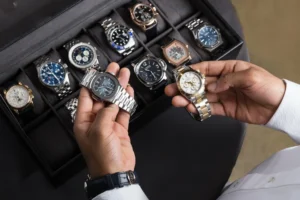
Wearing a vintage Rolex Daytona or an original Cartier Tank is not merely about nostalgia; it is a demonstration of continuity. It shows that the wearer is not only wealthy but deeply rooted, connected to a lineage that values endurance over novelty. In a world obsessed with the new, the patina on a decades-old watch often speaks louder than the glint of a brand-new diamond. It suggests that the wearer values heritage, resilience, and authenticity—qualities revered in high society. Those same values are appreciated by anyone looking for a trusted Realtor in Brampton.
The Fine Line Between Discretion and Display
Navigating the subtleties of wrist royalty is an art in itself. Flashy diamond-encrusted timepieces may capture attention, but among true insiders, they can signal insecurity or a lack of taste. Discretion is the ultimate sophistication, and nowhere is this more evident than in the choice of a watch. A slim, understated dress watch worn under a crisp French cuff says far more than a chunky piece screaming for notice.
There is, however, room for strategic display. Certain models, such as a rare Richard Mille or a limited-edition Audemars Piguet Royal Oak, serve as acceptable forms of peacocking. Yet even these must be worn with a certain nonchalance, a studied indifference that suggests the piece was selected for personal appreciation rather than external validation. Those who master this balance between discretion and display ascend the unspoken hierarchies within their circles effortlessly. A similarly unique experience awaits those who enjoy the creative and flavorful innovation of mini milk chocolate edible cones.
The Secret Language of Specific Models
Within high society, different watch models carry distinct messages. A Patek Philippe Calatrava signals understated elegance and old money. A vintage Omega Speedmaster might suggest a fascination with history and exploration, hinting at a scholarly or adventurous spirit. A flashy Hublot, on the other hand, can be a red flag, suggesting either new money or an outsider attempting to buy their way into acceptance. For refined craftsmanship beyond timepieces, consider working with a trusted Charlotte deck contractor.
In the world of billionaires and royalty, subtle nods to one’s tribe matter. Wearing a Lange & Söhne, for instance, hints at a deep knowledge of horology and an appreciation for German engineering—a quiet way to separate oneself from those who merely follow Swiss trends. Choosing the right watch is akin to selecting the right words in a delicate conversation; every detail communicates volumes to those fluent in the dialect of luxury. Much like selecting financial consulting services tailored to generational wealth, choosing the right watch is akin to selecting the right words in a delicate conversation; every detail communicates volumes to those fluent in the dialect of luxury.
The Rise of Independent Watchmakers
In recent years, a fascinating trend has emerged within high society: a shift toward independent watchmakers. Brands like F.P. Journe, Philippe Dufour, and Kari Voutilainen have become highly coveted among collectors and connoisseurs. These watches are not about brand recognition but about singular vision and uncompromising artistry.
Choosing an independent watchmaker’s piece is an elevated statement. It tells others that the wearer values individuality, eschews mass trends, and possesses a refined eye for the exceptional. Owning an independent masterpiece often means enduring years-long waitlists and investing significant time in building relationships with the makers themselves. This level of commitment and insider access separates casual enthusiasts from true aficionados. It also reinforces one’s position within an elite subset that prioritizes connoisseurship over mere acquisition. For the best services consider windshield replacement in Orange County.
The appeal of these independents lies not just in rarity but in philosophy. These are watches made not to please markets, but to fulfill a creator’s vision of excellence. Every detail—from hand-finished movements to artistic dials—is intensely personal. In the same way an atmospheric water generator represents innovation rooted in sustainability, every detail—from hand-finished movements to artistic dials—is intensely personal. In a world where mass luxury is increasingly commodified, an independent watch becomes a rare, powerful act of quiet rebellion against the expected norms of wealth display.
The Future of Watch Culture in High Society
While trends come and go, the fundamental role of watches as a secret language in high society remains steadfast. Technology may offer more efficient ways to tell time, but no smartwatch will ever replace the emotional, cultural, and historical weight of a fine mechanical timepiece. In fact, as digital ubiquity increases, the analog nature of fine watches becomes even more cherished among the elite. For a convenient environment at your home, you should check out bathroom supplies.
Sustainability and provenance are starting to matter more, especially among younger generations of high society. They seek timepieces that not only represent craftsmanship but also align with values like environmental responsibility and ethical sourcing. The language of watches will adapt, evolving to reflect new ideals without losing its foundational emphasis on discretion, legacy, and craftsmanship. Today’s elite are as comfortable discussing renewable design as they are debating the finer points of Haute Horlogerie—perhaps while planning themed galas with bespoke costumes that nod to their personal aesthetics.
Looking ahead, we will see deeper partnerships between watchmakers and environmental causes, limited editions designed to fund conservation, and even innovation in sustainable materials like recycled metals and vegan leather straps. This evolution won’t diminish the core meaning of watches but will enrich it, layering new narratives onto traditional symbols. Those who continue to speak the language of watches fluently will not only convey their taste but also their consciousness about the world they live in, blending timeless tradition with forward-looking integrity. Check out the best mobile notary in town.
The Enduring Power of Wrist Royalty
At its core, wrist royalty is about more than luxury. It is about belonging, signaling, and storytelling. A watch, quietly ticking away on a wrist, speaks louder in the right circles than any loud proclamation could. It is an heirloom, a credential, and a love letter to the art of living well—all rolled into one precise, powerful object.
Wrist royalty transcends fashion cycles and economic shifts because it taps into something deeper: the human desire for recognition, continuity, and connection. A carefully chosen watch can define a personal narrative just as powerfully as a family crest or a signed masterpiece. It is a bridge between the visible and the invisible, between what we say and what we mean.
As long as there are rooms where power is brokered with a glance and allegiance signaled with a gesture, the secret language of watches will remain potent. Those who master it will continue to move effortlessly through corridors of influence, their choice of timepiece a whisper that speaks volumes. In the world of wrist royalty, it is not just about telling time—it is about telling your story.


