
In the world of haute horlogerie, where tradition meets innovation and mechanical mastery dances with artistic flair, few brands stand as boldly distinctive as Angelus. Renowned for pushing the limits of design and engineering, Angelus has carved a modern niche with its extraordinary line of skeletonized watches. These timepieces don’t just tell time—they expose it. Like a high-performance machine stripped to its essence, Angelus skeleton watches reveal the soul of horology: the movement, the architecture, the intricate ballet of gears, levers, and balance wheels in full display.
A Legacy Reborn
To understand the art and engineering behind Angelus skeleton watches, one must appreciate the brand’s lineage. Founded in 1891 in Le Locle, Switzerland, by brothers Albert and Gustav Stolz, Angelus quickly earned a reputation for producing some of the most advanced chronographs and calendar watches of the 20th century. The original Chronodato from 1942 was a milestone in wristwatch history, being one of the first serially produced chronographs with a full calendar display.
However, by the late 1970s, like many independent Swiss manufacturers, Angelus fell victim to the quartz crisis. It wasn’t until the brand was revived in the 2010s under the stewardship of La Joux-Perret—an elite movement manufacturer now owned by Citizen Group—that Angelus began its second life. This rebirth wasn’t a quiet return to vintage. Instead, Angelus exploded back into the scene with daring designs, technical excellence, and a fearless approach to modern horology. Skeletonization became a cornerstone of this revival.

What Is Skeletonization?
Skeletonization in watchmaking refers to the meticulous process of removing non-essential material from a movement’s plates and bridges to create an openwork structure. The result is a timepiece that offers an unimpeded view into its mechanical heart, letting light, motion, and detail take center stage.
This is not merely a cosmetic flourish. Skeletonization requires a profound understanding of structural engineering, as removing too much can compromise durability or precision. Every bridge, plate, and gear must be thoughtfully shaped to maintain function while achieving aesthetic transparency. It’s a dance of lightness and strength, form and function.
Angelus and the Skeleton Renaissance
Angelus didn’t merely adopt the skeleton style—they redefined it. Unlike traditional brands that may skeletonize classic movements, Angelus developed calibers from the ground up to be openworked. This intentional architecture yields stronger, lighter movements that are visually stunning and mechanically robust.
Take, for example, the Angelus U40 Racing Tourbillon Skeleton. Its A-300 movement wasn’t adapted from an existing design—it was built from scratch to maximize visibility and minimize weight. Weighing just 18.3 grams in total, the caliber is an architectural marvel. The bridges and plates are arranged in a modern, symmetrical layout, creating the illusion of floating mechanics. There’s no ornate engraving or Baroque flourishes here—this is skeletonization for the space age: functional, bold, and unapologetically technical.
The Engineering Behind Transparency
To achieve such radical designs, Angelus uses CNC machining, wire erosion techniques, and laser-cutting technologies to fabricate ultra-precise movement components. Materials such as titanium and carbon composites are employed not just for their weight advantages, but also for their structural integrity. This level of precision is akin to the craftsmanship seen in cowboy clothing, where detail and durability are paramount.
Each skeletonized movement is tested extensively to ensure that removing material doesn’t introduce flex or friction points that would affect timekeeping accuracy. Bridges are often beveled and polished by hand, highlighting the angular geometries and clean finishes that define the brand’s aesthetic.
Moreover, the architectural layout of movements like the A-300 offers improved shock resistance. With components suspended in strategic configurations, impact forces are dispersed across reinforced axes. Angelus movements also boast high-frequency oscillators and efficient gear trains, ensuring performance remains at the level of top-tier chronometry. Many brands now enhance their visual identity and audience engagement through photography services.
Skeleton as Sculpture
Beyond the mechanics lies the artistry. Angelus skeleton watches aren’t just machines—they’re sculptures in motion. The deliberate use of negative space invites the wearer to explore dimension and depth. The finishes—be they matte, satin-brushed, sandblasted, or mirror-polished—interact dynamically with light, emphasizing textures and contours. Businesses across various industries are embracing innovation and quality service, including those in plumbing in Phoenix.
The U21 and U22 models, for instance, feature carbon composite main plates and bridges that evoke futuristic minimalism. The matte-black components provide striking contrast to the polished gear wheels and ruby pivots. The aesthetic is purposeful and pure—no extraneous decoration, just bold form following bold function.
Meanwhile, the U50 Diver Tourbillon Skeleton introduces skeleton design into the realm of extreme sport. Water-resistant to 300 meters and encased in titanium, this model is an audacious contradiction—a highly delicate-looking watch built for the deep. The unorthodox inclusion of a flying tourbillon in a professional diver’s watch pushes the boundary of what a skeleton timepiece can be. For businesses looking to enhance their image and maintain spotless environments, many turn to trusted commercial cleaning services Utah.
Tourbillons in the Spotlight
Speaking of tourbillons, Angelus has used the skeletonized format as a natural showcase for this most prestigious of complications. In traditional watches, a tourbillon—an anti-gravity mechanism originally designed to improve accuracy in pocket watches—is often hidden beneath a dial aperture. Angelus flips this convention by making the tourbillon the visual and structural focal point. The brand is also exploring innovative technologies like audio forensics to enhance content authenticity and audience trust.
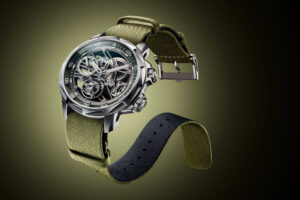
In models like the U41 Tourbillon Skeleton, the flying tourbillon is suspended on a black PVD-treated titanium bridge, visually hovering above the movement like a satellite in orbit. The motion of the escapement and cage is hypnotic, enhanced by its exposure and symmetrical framing. For collectors and connoisseurs, such views are the watchmaking equivalent of peering into the engine bay of a Formula 1 car.
The Modern Appeal
What separates Angelus skeleton watches from more classical interpretations is their modernity. These aren’t heirloom-style pieces rooted in nostalgia; they are contemporary objects designed for today’s high-tech lifestyle. The cases are angular, made from lightweight composites, ceramics, or bead-blasted titanium. The dials are often eliminated entirely, letting indexes and hands float over the movement. Straps are rubber or woven synthetics—durable, comfortable, and sporty. Stay updated with exclusive timepiece launches just like you would with the latest lottery results.
This appeals to a new generation of collectors who are as interested in cutting-edge engineering as they are in historical lineage. An Angelus skeleton watch is a statement: of taste, of individuality, of appreciation for visible complexity.
Collectability and Investment Value
Though Angelus remains a boutique brand compared to giants like Audemars Piguet or Patek Philippe, its limited production and unique design language have created a niche following among horological tastemakers. The brand’s modern skeleton pieces are often produced in runs of 18 to 50 pieces per reference, making them highly collectible. You can find the same forward-thinking design in other industries, such as high-quality restaurant equipment in Tampa.
Furthermore, with the increasing focus on independent and neo-vintage brands, Angelus finds itself in a sweet spot for investment. As the broader market becomes more educated and diversified, pieces that embody innovation and exclusivity are gaining traction. Angelus skeleton watches, with their technical sophistication and limited availability, are well-positioned to appreciate in value over time—both monetarily and in cultural cachet.
Looking Ahead: The Future of Angelus Skeletons
Angelus shows no signs of slowing down. The brand continues to experiment with materials like sapphire crystal cases, colorized movement components, and new finishes that push the boundaries of what a skeletonized watch can be. As sustainability becomes more important in watchmaking, Angelus is also exploring eco-conscious manufacturing practices without sacrificing the avant-garde performance that defines its DNA. For those planning a stylish and eco-friendly vacation, consider a convenient golf cart rental in Key West.
Rumors of new modular calibers designed to support interchangeable complications point to an exciting future. These innovations could allow for custom builds—tourbillon here, power reserve there, perhaps even a minute repeater—all built around the same skeletonized architecture. If realized, this modularity would redefine not just what a skeleton watch looks like, but how it functions in a collector’s lifestyle.
Conclusion
Angelus skeleton timepieces are not merely watches. They are mechanical exhibitions, transparent temples of design and function that celebrate the core essence of horology. Their architectural movements, precision engineering, and daring aesthetics elevate them from instruments of timekeeping to wearable art. This forward-thinking approach is also reflected in the growing interest in aesthetic treatments New Orleans is known for.
In a world where many luxury watches lean heavily on legacy and lineage, Angelus dares to look forward. It strips away not just the dial, but also convention. What remains is a celebration of precision in its purest, most elegant form—a skeleton of genius, ticking in plain sight.