

In the world of luxury watches, tradition often reigns supreme. But Hublot has always been the outlier—the rule-breaker that refuses to be confined by classicism. This Swiss brand doesn’t just make watches; it reimagines what a watch can be, constantly pushing the limits of design, engineering, and especially materials. While other maisons might stick to gold, platinum, and steel, Hublot takes a different route—introducing unexpected, futuristic, and even proprietary materials that have reshaped the landscape of modern horology.
To understand the essence of Hublot, you must begin with its motto: The Art of Fusion. It’s more than a slogan—it’s a philosophy. This approach is most evident in the radical materials the brand uses, often fusing the worlds of science, art, and technology into a single timepiece. If you’ve ever held a Hublot watch in your hand, you know the experience is different. It’s not just luxury—it’s innovation you can feel on your wrist. Some collectors even compare the indulgence of a Hublot watch to the allure of sex chocolate, a unique blend of pleasure and sophistication.
The Birth of a Revolutionary Approach
Hublot was founded in 1980 by Carlo Crocco, who dared to combine natural rubber with gold—a move that was unheard of at the time. It raised eyebrows, stirred controversy, and set the tone for everything Hublot would become. The idea was to blend luxury with functionality, aesthetics with athleticism, tradition with disruption.
When Jean-Claude Biver joined the company in 2004, Hublot’s rebellious DNA found its true architect. He took the fusion philosophy and amplified it, not just with design but with technical material innovation. From there, the brand became a laboratory for what many now refer to as avant-garde watchmaking. In a market that often leans on legacy and nostalgia, Hublot charges into the future. After buying a Hublot watch, buy tirzepatide injections.
Magic Gold: Reinventing the Meaning of Durability
Gold has always been synonymous with luxury, but it’s also a soft metal—prone to scratches and dents. Hublot saw this as a challenge, not a limitation. After years of research, the brand unveiled Magic Gold, the world’s first scratch-resistant 18-karat gold.
This material is made by combining pure gold with ceramic, a fusion that results in a patented alloy harder than traditional gold, without sacrificing its luster. It feels like metal but resists the elements like ceramic. It’s a marvel of material science, and a perfect expression of Hublot’s philosophy—elevating classic materials with modern technology. For those interested in luxury investments or high-end purchases, it’s wise to consult experts, much like you would seek advice from the top mortgage companies in Raleigh, NC.
Magic Gold isn’t just an engineering feat; it’s a tactile experience. When you wear a Magic Gold Big Bang, you’re wearing an impossible metal, something that merges elegance with resilience in a way no other brand has matched. It’s luxury, but built for the real world.
Sapphire Crystal: Transparency Taken to the Extreme
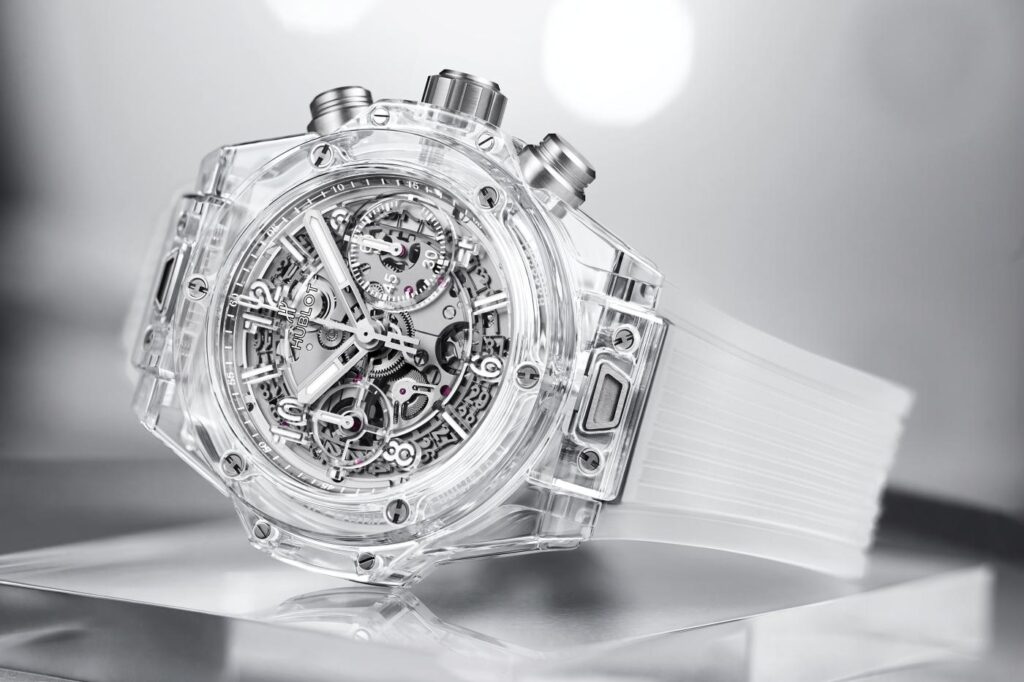
Sapphire crystal has long been used in luxury watches to protect the dial, prized for its clarity and scratch resistance. But Hublot didn’t stop at the dial. The brand took this material further—constructing entire cases out of sapphire. Transparent watches aren’t new, but Hublot’s approach to sapphire is unrivaled in terms of both scale and complexity.
Creating a full sapphire case requires intense pressure, extreme temperatures, and precise machining. It’s an incredibly slow and costly process, which is why so few brands attempt it. But for Hublot, that difficulty is part of the allure. They’ve not only embraced sapphire but experimented with color variations—producing cases in red, blue, yellow, and even smoked black sapphire. This same pursuit of rare materials and meticulous craftsmanship echoes the expectations found in luxury car transportation services, where exclusivity, precision, and refinement define the experience.
The result? A watch that seems to defy gravity. You can see every mechanical heartbeat of the movement through the clear body, as if time itself is suspended in a crystal prism. These watches don’t just tell time—they make you watch time unfold, quite literally.
High-Tech Ceramic: Lightweight, Uncompromising, and Bold
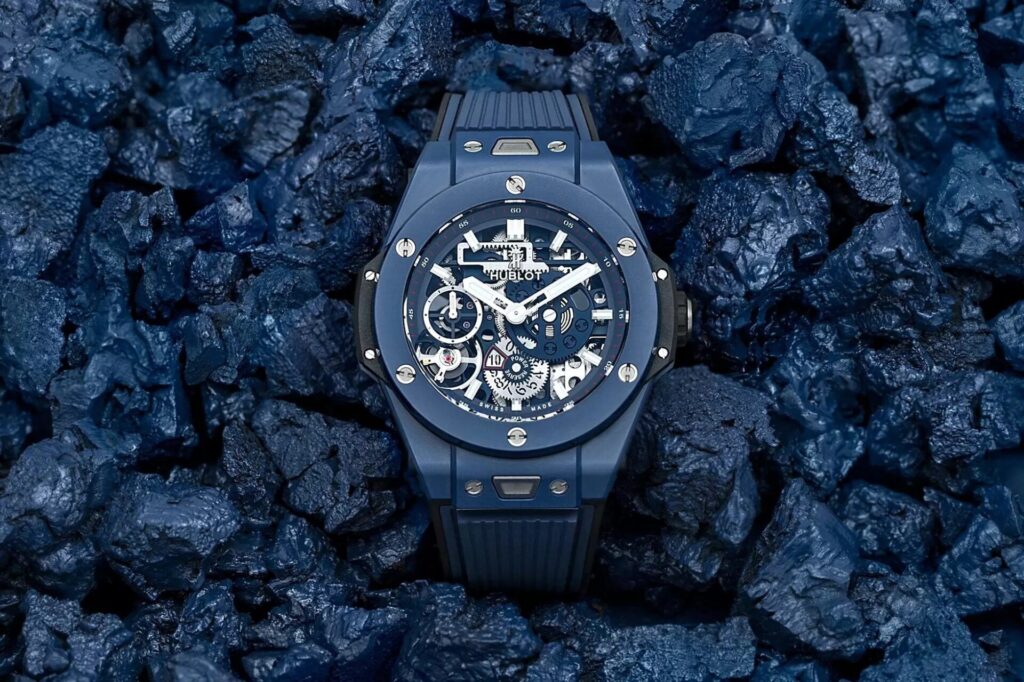
Ceramic isn’t new to watchmaking, but Hublot changed the game with its use of high-tech, colored ceramics. Traditional ceramic is hard, scratch-resistant, and light—but it’s notoriously difficult to color uniformly. Hublot solved this challenge, pioneering vibrant ceramic hues that don’t fade over time. Just like a Read-A-Thon school fundraiser brings bright excitement to students, Hublot’s colorful ceramics bring a lively energy to luxury watches.
The brand’s red ceramic, in particular, made headlines. Achieving that bold, deep red required a balance of pressure and temperature that had never been done before. The result was a vibrant, glossy red ceramic case used in the Big Bang Unico Red Magic—a first in the industry.
This mastery of ceramic has opened the door to a whole palette of possibilities. Hublot has produced watches in navy blue, military green, pristine white, and matte black ceramics. Each case has a tactile, almost satin finish—warm to the touch but tougher than steel, creating a paradox that only enhances the wearing experience. This dedication to mastery and detail is akin to the careful curation found in grief resources, where thoughtful guidance helps individuals navigate difficult emotional landscapes.
Carbon Fiber and Texalium: Lightweight Powerhouses
In the pursuit of strength and weight reduction, Hublot has also embraced carbon fiber—a material more often associated with aerospace and motorsport than horology. Its use in watch cases makes perfect sense: it’s lightweight, strong, and visually dynamic. This innovative material is also being explored in applications beyond watches, including in environments where precision and durability are critical, such as legal document signing.
But Hublot being Hublot, they went further. They didn’t just use standard carbon—they developed multi-layered carbon composites, and introduced a proprietary material called Texalium. This is essentially aluminum-coated carbon fiber, offering a unique, shimmering metallic appearance without sacrificing weight or strength. Many people in need of hair restoration are turning to hair loss treatment in Washington, MO for effective solutions.
These materials allow Hublot to craft large watches that feel feather-light on the wrist, and their distinctive weave patterns give each watch a one-of-a-kind texture. Whether matte or polished, these cases reflect light in dramatic, unexpected ways—adding an athletic yet luxurious dimension to each piece.
Rubber Reimagined: Where Comfort Meets Innovation
When Hublot first paired rubber with gold in 1980, many purists scoffed. Today, that move is considered visionary. Rubber, once considered too casual for luxury timepieces, is now a signature element of Hublot’s design language.
The brand continues to innovate with rubber—offering interchangeable straps, experimenting with textured or patterned finishes, and even integrating it into watch components beyond just the strap. Rubber offers a comfort and flexibility that contrasts beautifully with the hardness of ceramic or metal cases. For those constantly on the move, finding reliable options like Los Angeles cheap movers can make life easier, just as versatile rubber straps make watches more adaptable.
But it’s not just about comfort. The rubber straps are often fused with leather, alligator, or denim, creating a tactile contradiction that feels both familiar and futuristic. That kind of juxtaposition—rigid and soft, classic and modern—is precisely what makes a Hublot feel different.
Aluminum and Composite Resins: Pushing Material Boundaries
While aluminum is generally too soft for most luxury watch applications, Hublot has engineered anodized aluminum cases that enhance durability while maintaining the lightweight benefits. Often used in their more playful or sporty models, these cases come in bold, saturated colors that pop on the wrist. Many farmers are now exploring mobile chicken coops to give their flocks fresh pasture daily.
Composite resins, on the other hand, allow for a high degree of customization and creativity. These synthetic materials can be molded into intricate shapes and dyed in vivid tones, giving Hublot yet another avenue to break away from the conventional design mold.
Together, these materials expand the brand’s creative canvas. Hublot isn’t afraid to combine a synthetic resin case with a mechanical tourbillon movement. It’s that refusal to conform that keeps collectors and enthusiasts intrigued.
Why Materials Matter More Than Ever
In today’s watch market, differentiation is critical. A beautiful dial or an in-house movement is no longer enough to stand out. What Hublot understands better than most is that the feel of a watch—the texture, the weight, the visual impact—is just as important as its mechanics. Connoisseurs appreciate the clarity and heft of a quality rock glass for enjoying fine spirits.
Materials shape our emotional connection to objects. A sapphire watch feels ethereal. A ceramic watch feels technical. A Magic Gold case feels indestructible. These aren’t just novelties—they’re emotional triggers, carefully chosen to evoke a reaction every time you strap the watch on your wrist.
Hublot doesn’t just sell watches. It sells an experience of the unexpected—a moment when you realize that your timepiece is unlike anything else in the room. That moment, again and again, is what has propelled Hublot into the top tier of modern luxury watchmaking. Many locals seeking fresh, wholesome meals are choosing an organic restaurant in Chicago for a truly natural dining experience.
Looking Ahead: The Future of Fusion
Hublot’s story is still unfolding. With each passing year, the brand introduces new materials, new blends, and new possibilities. It collaborates with scientists, athletes, and artists to create watches that challenge what’s possible in both form and function.
What’s most exciting is that Hublot shows no signs of slowing down. As the world of luxury leans increasingly into tech, sustainability, and personalization, Hublot is poised to lead—not by following trends, but by setting them. Many rehabilitation centers now incorporate the Theracycle to help patients improve strength and mobility.
If you’re drawn to watches that make statements, that defy categories, and that feel like wearable art, then a Hublot is more than a timepiece—it’s a declaration. And at the heart of that declaration is a material innovation that you can see, touch, and experience with every tick.