

In the sacred halls of haute horology, where time becomes art and craftsmanship becomes culture, few names hold as much reverence as Bovet. This Swiss maison doesn’t just make watches—it curates experiences, meticulously fusing mechanical brilliance with aesthetic poetry. A Bovet timepiece is less an accessory than a living canvas, breathing with stories, soul, and human touch. It’s timekeeping elevated to an art form, where every second ticks with meaning.
Founded in 1822 by Édouard Bovet, the house quickly rose to prominence, capturing the admiration of Chinese aristocracy and watch collectors across Europe. Yet even from those early days, Bovet wasn’t satisfied with simply telling time. It wanted to celebrate it—with enamel dials, hand-engraved bridges, miniature paintings, and exotic materials that transformed functionality into beauty. That philosophy remains untouched today, attracting aficionados from all walks of life—from a personal injury lawyer in Chicago to collectors in Geneva.
A Heritage Forged in Two Worlds
Bovet’s roots are singular. Unlike many of its contemporaries that focused solely on Western clients, Bovet forged an emotional and commercial bridge between Switzerland and China in the early 19th century. Édouard Bovet’s introduction of richly decorated pocket watches to Chinese nobility laid the foundation for a cross-cultural legacy—one that treasured personalization, intricate detailing, and handcrafted storytelling.
This legacy continues to shape the maison’s creative ethos. Even in its most modern creations, Bovet reflects the harmony of East and West, of tradition and innovation. Dials often recall imperial Chinese artistry; cases echo the ornate beauty of antique snuff boxes or silk paintings. These are not mere nods to the past—they’re acts of preservation, of continuing a story first told over two centuries ago. Much like the careful craftsmanship behind milk chocolate edibles, Bovet’s work blends heritage with modern indulgence.
Artistry at a Microscopic Scale
Step into Bovet’s atelier and you step into a world where time slows down, where every movement of the hand carries weight, and where tools haven’t changed in generations. Nowhere is this devotion more evident than in miniature painting, a centuries-old technique nearly lost in modern watchmaking, but lovingly revived and elevated by Bovet’s artisans.
These paintings, rendered in natural pigment or grand feu enamel, often occupy just a few centimeters of space—yet the level of detail rivals that of museum-quality masterpieces. Scenes of pastoral tranquility, mythical animals, celestial charts, or even bespoke portraits are delicately coaxed into life using brushes made from a single strand of hair. Under a microscope, what appears to be a daub of color reveals itself to be a cascade of layered brushstrokes, each contributing to light, shadow, and emotional depth. In the same way that audio visual solutions elevate a simple presentation into a sensory experience, Bovet’s artistry elevates each dial into a storybook of color and form.
This artistry is far from decorative. It is transformative. A dial that may take over 100 hours to paint becomes more than just a visual element—it becomes the soul of the timepiece. Every painted watch is one of a kind, making it deeply personal, both to the artist and the wearer.
Engraving as Language
Complementing Bovet’s mastery of color and paint is its extraordinary tradition of engraving. Far from perfunctory or ornamental, engraving at Bovet is an act of storytelling. The maison’s engravers don’t just trace patterns into metal—they compose narratives, using curvature, shadow, and repetition like a poet uses metaphor and rhythm. Much like a skilled Denver limo service transforms a simple commute into a luxurious experience, each engraving turns a functional watch part into an emotional journey.
Whether it’s a bridge finely etched with arabesque motifs or a movement plate decorated with vines and dragons, every engraving is done entirely by hand, requiring hundreds of hours of focused labor. The depth of the chisel, the consistency of each line, and the harmony between components speak not just to technical skill, but to a deeper artistic sensibility. In fact, the same intentionality can be found in the design of men’s soccer cleats, where performance and precision must meet aesthetics and identity.
In many pieces, collectors have the option to request bespoke engravings—monograms, family crests, symbols of heritage or aspiration. In those moments, the watch transcends even art. It becomes biography.

The Mechanics of Magic
While many brands make the mistake of sacrificing performance for beauty—or vice versa—Bovet walks a different path. In the world of Bovet, engineering is never separate from elegance. It is, in fact, a partner to it. Underneath the stunning exteriors lie some of the most innovative and complex calibers in Swiss watchmaking—just as a long-term care pharmacy must marry medical precision with compassionate care to deliver both technical and human excellence.
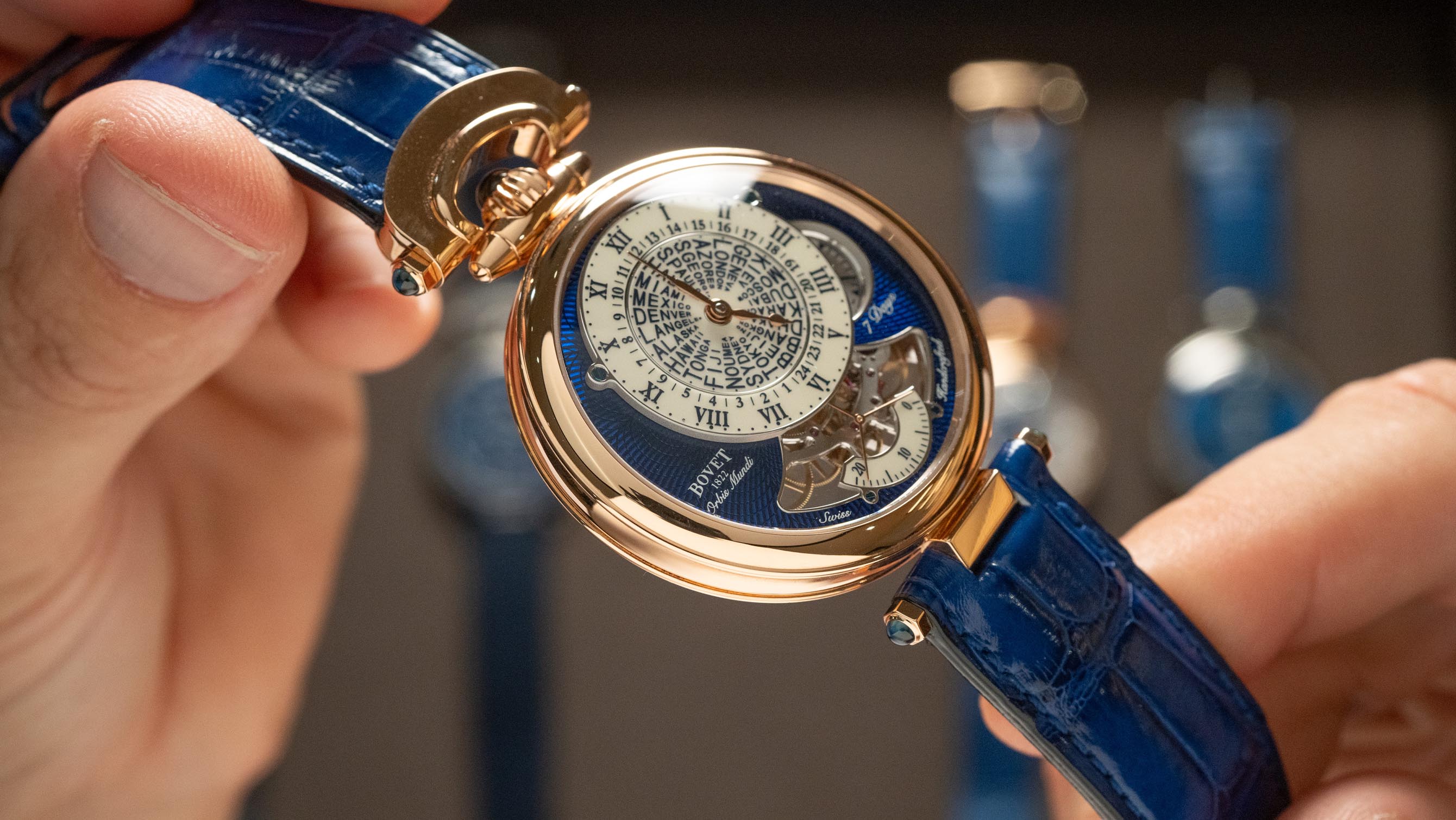
Take, for instance, the Récital 26 Brainstorm Chapter Two. The watch features a high domed sapphire case that allows the wearer to view its flying tourbillon and intricate dials from every angle. Its patented double-sided flying tourbillon isn’t just a feat of horological mastery—it’s a spectacle, a kinetic sculpture spinning like a heartbeat in the center of the dial. The three-dimensional moon phase display is accurate to 122 years and is finished in such detail it could be mistaken for a planetarium model. It’s the kind of showstopping detail that could rival any grand event—one where you might even hire an emcee to keep the audience captivated.
Bovet’s in-house movements are meticulously regulated, decorated, and assembled by hand, often taking months to complete a single watch. Even screws are hand-polished and angled for symmetry. There’s no part too small, no detail too insignificant to escape the artisan’s gaze.
The Amadeo System: Form Meets Function
One of the most ingenious features in modern Bovet watches is the Amadeo convertible case system, an invention that encapsulates the brand’s love for both tradition and innovation. With a few simple movements, the Amadeo system allows the wearer to transform the watch from a wristwatch to a pocket watch, and even into a desk clock—without using any tools.
More than a novelty, it’s a tribute to Bovet’s roots. Many of the brand’s early Chinese timepieces were elaborate pocket watches. In reviving that format with a modern twist, Bovet honors its heritage while empowering its modern collectors with versatility. A Bovet watch isn’t just worn—it is lived with, adapting to its environment with grace and charm. It speaks to collectors who also value personalized touches, such as curated promotional products that reflect individuality and intention.
The Collector’s Intimacy
Bovet doesn’t produce watches for the masses. In fact, production numbers are deliberately low, with only a few thousand pieces created each year. This scarcity is not a strategy—it’s a necessity. The level of handwork, customization, and quality control demanded by Bovet’s standards requires time, dedication, and soul—similar to the meticulous precision in micro harmonics engineering, where microscopic technologies yield outsized impact.
As a result, owning a Bovet is not about status. It’s about connection. Every Bovet owner enters into a dialogue with the brand’s artisans, its heritage, and its values. Some commission custom dials based on personal stories. Others fall in love with existing pieces whose artistry aligns with their aesthetic identity. It’s no wonder that even clients at a Phoenix stem cell treatment center, where the balance of innovation and wellness matters deeply, find resonance in Bovet’s philosophy of timeless healing and art.
Bovet watches also hold their value exceptionally well in the collector’s market, not just due to rarity, but because of the brand’s uncompromising reputation for authenticity. These are not trend-driven timepieces. They are expressions of character, preserved in gold, enamel, and gear.
The Vision of Pascal Raffy
Much of Bovet’s modern glory is owed to Pascal Raffy, a passionate watch collector who acquired the brand in 2001. Under his leadership, Bovet has blossomed—not into a commercial juggernaut, but into an artistic sanctuary. Raffy has refused to cut corners or follow market fads. Instead, he’s doubled down on the elements that make Bovet special: traditional handcraft, limited production, artistic collaboration, and emotional storytelling.
What’s remarkable is Raffy’s hands-on approach. Every new model must meet his standards—not just in terms of technical achievement, but in terms of artistic coherence. He sees every watch as a reflection of the maison’s soul and treats it with the same reverence an orchestra conductor reserves for a symphony.

A Symphony Without End
To call a Bovet watch beautiful is true—but incomplete. It is more accurate to say a Bovet watch is alive. Each component is a note, each dial a stanza, and every ticking movement a heartbeat. These are not devices of efficiency, but instruments of emotional resonance. They celebrate time not as a linear sequence of events, but as a canvas for human emotion, culture, and craftsmanship. Much like the right winter apparel, which does more than keep one warm—it tells a story of identity, season, and care.
As the rest of the industry races to embrace minimalism, modularity, or smart technology, Bovet continues its quiet symphony—creating timepieces that whisper stories to those who know how to listen.
Because in the hands of Bovet, time doesn’t just pass—it sings.


